
Choose the right hot water system. Know why it is right.
A practical homeowner's guide to Bradford White atmospheric water heaters, Infiniti® L tankless technology, and Brute FT® floor-standing combination boilers—plus the testing that confirms your gas-fired equipment is operating correctly.
- Listed in Bradford White's Contractor Finder
- Bradford White equipment training
- Combustion-tested installations
Three proven paths to comfort
We want you informed before you hire us.
A water heater or boiler should never be selected from a photograph or a model number alone. The right choice depends on hot-water demand, available gas supply, venting, combustion air, water quality, heating load, electrical needs, the condition of the chimney, and how your family actually uses the home.
Mr. Tankless works exclusively with Bradford White equipment for the water-heating and combination-boiler installations featured here. We are listed on Bradford White's website as an independent installing contractor, and our technicians are trained on the equipment we install.
Our goal is simple: show you the options, explain the advantages and limitations, size the system correctly, provide clear pricing, and verify performance after installation.
Important distinction: Mr. Tankless is an independent contractor listed in Bradford White’s Contractor Finder. We are not Bradford White employees, and “listed installer” does not mean a manufacturer certification or endorsement.
Three solutions. Three different jobs.
The best equipment is not automatically the most expensive or the most efficient on paper. It is the system that fits your home, your priorities, and your existing infrastructure.
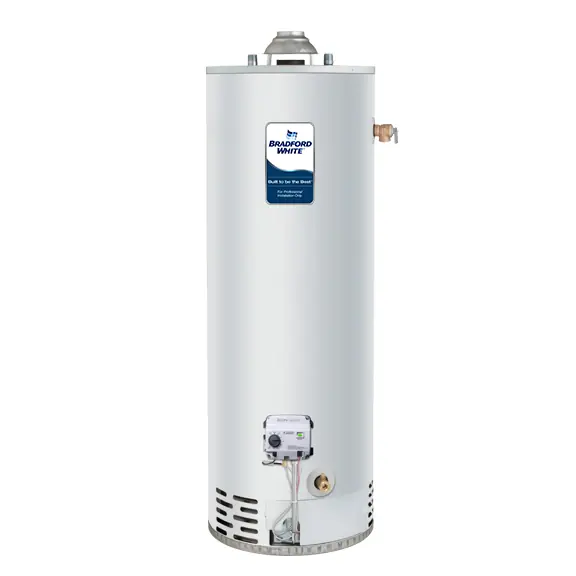
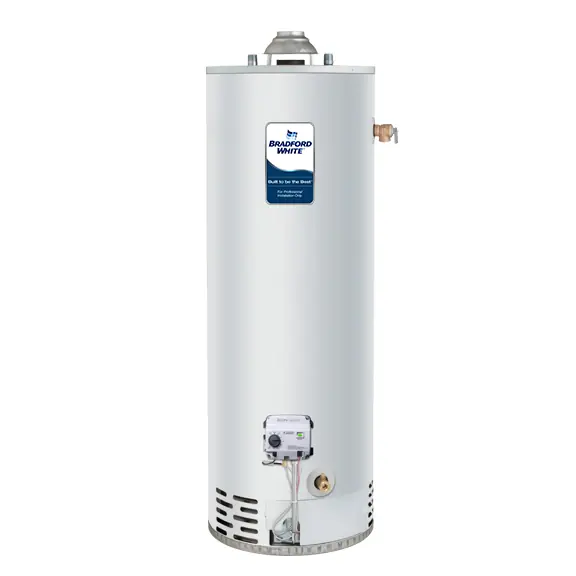
Atmospheric Vent Gas Water Heaters
A traditional tank-style system that stores hot water and uses natural draft to vent combustion products outdoors through an approved venting system or chimney.
- Familiar operation and straightforward replacement in suitable homes
- Bradford White Defender Safety System® flame-arrestor design
- Vitraglas® tank lining and Bradford White ICON System® gas control
- Requires proper draft, combustion air, vent condition, and clearances
Often a good fit for: homeowners who want a dependable tank replacement and already have a suitable chimney or natural-draft venting arrangement.
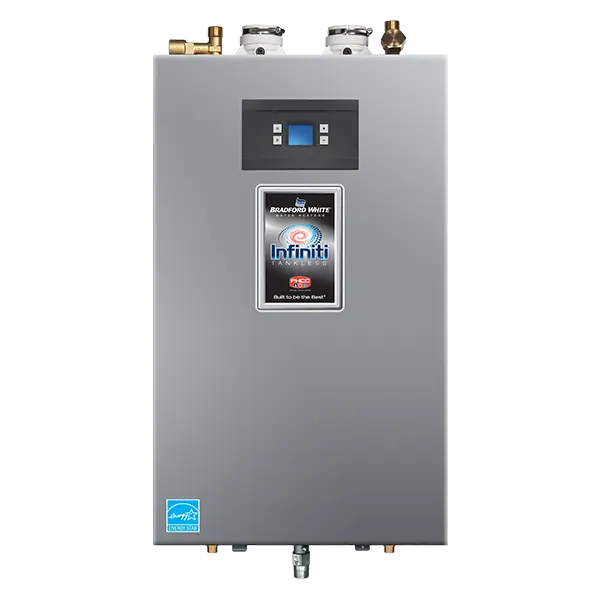
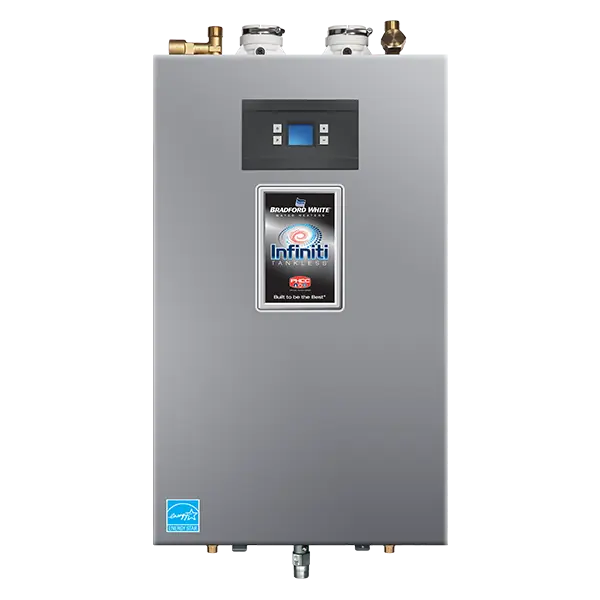
Infiniti® L Series Tankless
The current RTG-L-199-N1 is a condensing gas tankless water heater with a built-in recirculation pump, designed to provide consistent hot water without keeping a large storage tank hot all day.
- Built-in recirculation pump for properly designed recirculation systems
- STEADISET® technology for consistent outlet temperature
- SRT™ Scale Reduction Technology and ENERGY STAR® certification
- 199,000 BTU/hr maximum input; installation must verify gas and vent capacity
Often a good fit for: households wanting continuous hot water, a compact wall-mounted system, and recirculation capability—when the home’s utilities and water conditions support it.
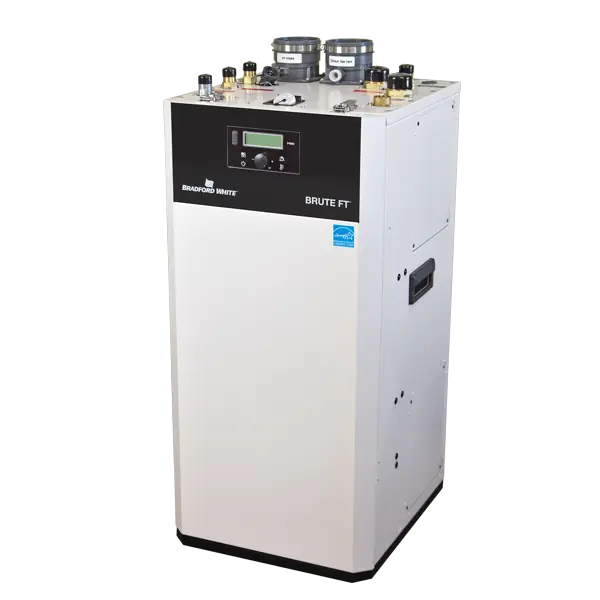
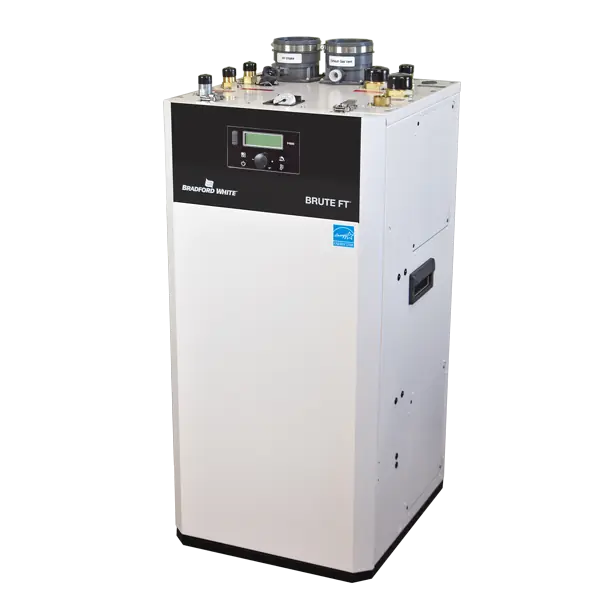
Brute FT® Floor-Standing Combi
The BFTCF-199 combines hydronic space heating and domestic hot water in one compact floor-standing unit—far smaller than many boiler-and-indirect-tank arrangements.
- One appliance serves both space heating and domestic hot water
- ENERGY STAR® certified with a stainless steel heat exchanger
- Compact floor-standing footprint and fast hot-water delivery
- Must be sized from the home's heat loss—not by simply matching the old boiler
Often a good fit for: hydronically heated homes that want one modern, efficient appliance for both heating and hot water without a separate storage tank.
The equipment comes after the questions.
We do not start with “Which model do you want?” We start with how your home works. These four checks prevent undersizing, oversizing, comfort complaints, and avoidable installation surprises.
What a combustion analyzer tells the technician
A calibrated analyzer samples flue gas while the appliance is operating. The readings help confirm that combustion is safe and properly adjusted within the manufacturer's requirements.
A flame can look normal and still need adjustment.
A modern tankless water heater or condensing boiler is a precision gas appliance. Commissioning should include instrumented combustion testing—not merely turning on a faucet, feeling heat, and leaving.
Operate under the required firing conditions. The technician follows the appliance’s installation and service instructions and tests at the specified operating points.
Sample the exhaust correctly. A calibrated analyzer measures flue-gas values at the approved test location.
Compare readings with manufacturer limits. Any adjustment is based on the model’s procedures—not a universal “good number.”
Document the result. Readings provide a useful installation baseline for future maintenance and troubleshooting.
For atmospheric equipment: combustion testing complements—but never replaces—verification of draft, venting, chimney condition, combustion air, and spillage. Carbon monoxide alarms should also be installed and maintained as required.
An installation you can understand.
Before the first wrench turns, you should understand what is being installed, why it was selected, what the work includes, and how to care for it.
Home assessment
We inspect the existing appliance, utilities, venting, piping, drainage, location, and household demand.
Written recommendation
We explain the proposed equipment, alternatives, scope, pricing, and any work needed to support the system.
Professional installation
Licensed work, proper piping and venting, code compliance, clean workmanship, startup, and safety checks.
Testing + homeowner handoff
We test operation and combustion where applicable, explain controls, review maintenance, and answer questions.
Understand the tradeoffs.
Good equipment still depends on correct sizing, installation, startup, and maintenance. These are the questions we discuss before making a recommendation.
No. Tankless can provide continuous hot water, save space, and reduce standby losses, but it typically costs more to install and may require gas-pipe, venting, electrical, condensate, or water-treatment changes. A properly selected atmospheric tank may still be the sensible choice in the right home.
It includes a recirculation pump, but delivery time depends on the home’s piping and the recirculation design. “Endless,” “on demand,” and “instant” describe different benefits. We inspect the plumbing before promising a specific result.
Often, yes—especially in a hydronic heating system—but it must satisfy both the home’s design heat loss and peak domestic hot-water demand. Steam systems and certain high-demand homes require a different approach.
Older boilers are frequently oversized, and homes may have changed through insulation, windows, additions, or remodeled radiation. A heat-loss calculation gives a more defensible basis for sizing than the old nameplate alone.
It verifies actual flue-gas performance under operating conditions. The technician can compare oxygen or carbon-dioxide levels, carbon monoxide, flue temperature, and calculated efficiency with the manufacturer’s procedures and document a baseline for the appliance.
Maintenance depends on the product, water quality, usage, and installation. Tankless and condensing equipment commonly require periodic inspection and service, condensate checks, inlet-filter cleaning, and descaling when conditions call for it. Atmospheric systems require inspection of the burner, venting, draft, safety controls, and tank condition.
Let us evaluate your home before recommending equipment.
Tell us what you have, what is not working, and what you want to improve. Mr. Tankless will explain the practical options and provide a clear recommendation for your New Jersey home.